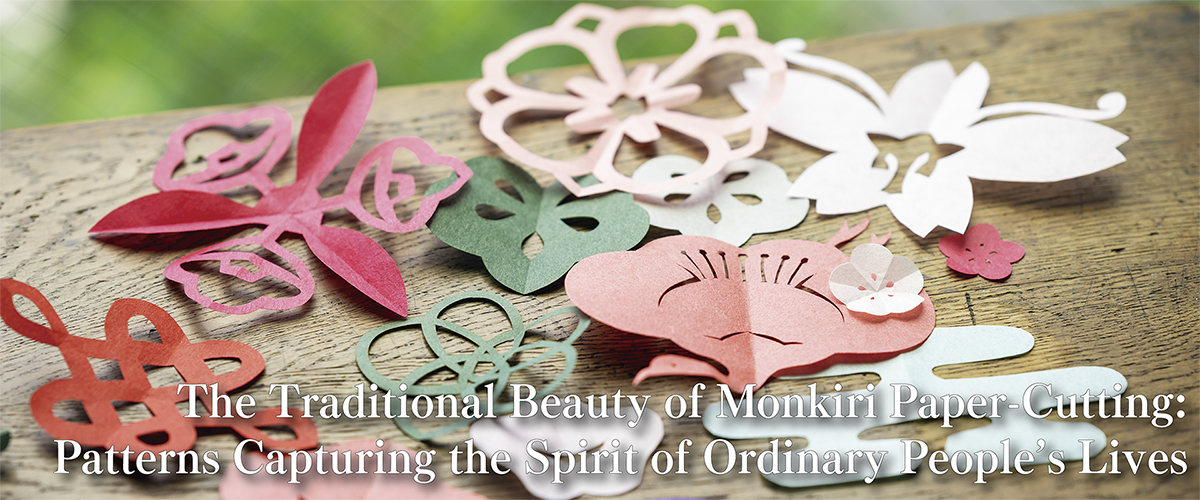
Fold a sheet of paper, cut along the template, and gently unfold it. The pattern that gradually emerges in the palm of your hand will likely strike a chord.
You might feel something like the glee this craft used to bring to the children of the Edo period (1603–1868) at terakoya schools for the common people.
With monkiri asobi, a paper-cutting pastime enjoyed since that era, artist Nabo Shimonaka bridges the past and present, conveying the charm of patterns created and refined in Japan, the culture of Edo townspeople, and contemporary values of the time. We spoke with the artist, who continues to explore the workings of people’s lives and culture, drawing on monkiri asobi as a starting point. We wanted to learn more about the special appeal of paper in the ways it is deeply intertwined with daily life.

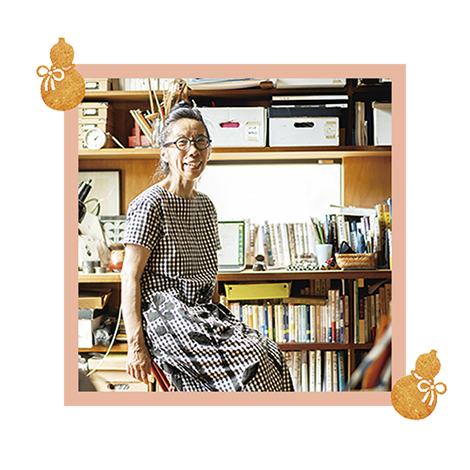
Sculptor/artist.
Nabo Shimonaka
Born in Chiba Prefecture. She began researching and exploring cultural traditions involving patterns after encountering monkiri, an Edo-period paper craft. In addition to holding workshops and exhibitions in Japan and overseas, she publishes the Monkirigata book series. She also engages in the research and promotion of paper culture and folk culture. She organizes the Kyureki Cafe, holding events based on the traditional lunar calendar. She serves as Assistant Director of the Showa Era Lifestyle Museum and Chair of the Judging Committee for the Kirigami Exhibition at the H. C. Andersen Park Kodomo Art Museum (Funabashi City).
https://www.xpl.jp/ (ex-plantae/Uyuen)
https://explantae.theshop.jp/ (Online store)

Fold a sheet of paper, make cuts in it guided by a template, gently unfold it, and a beautiful pattern emerges. There is real wonder and excitement in watching a simple, small, folded piece of paper transform into what seems an intricately crafted pattern as you unfold it. As you unfold it with your fingers, you feel the tactile pleasure and joy of unexpected discovery that can only be experienced with this kind of analog pastime. Nabo Shimonaka continues to work to rediscover and pass on to the present day the charm of monkiri asobi, a traditional Japanese paper-cutting game that, while once popular among the common people of the Edo period (1603–1868), had been largely lost to the tides of time.
Monkiri asobi developed through connections between Japan’s culture of kamon family crests and the creativity of Edo-period common people. The family crests used as designs are said to have originated in the Heian period (794–1185) as patterns used by nobility to mark their ox-drawn carriages and furnishings. Later, their use spread to the samurai class. During the Sengoku period (c.1467–1590), they served as symbols to distinguish enemies from allies on the battlefield, and by the Edo period, their use had come to permeate the common people’s daily lives. Everything from plants such as cherry blossoms, ume apricot blossoms, and kikyo (bellflowers), to living creatures like cranes and butterflies, and natural phenomena such as waves and snow — even implements like folding fans and wheels — were used as family crest motifs.
“Kamon crests have a pretty stiff, formal image, but when you look more closely into them, they really turn out to be a much freer form than that,” remarks Shimonaka. Just as she says, traditional Japanese kamon patterns indeed incorporate much humor that might bring a smile or laugh. Even more interestingly, the patterns were not merely decorative. “For instance,” she continues, “consider a couple of the patterns’ names: Daki-myoga* means “hug of the myoga buds,” and Irechigai-myoga means “flip-flopped myoga buds.” While they share the same myoga (Japanese ginger) motif, they feature contrasting configurations, and the names alone suggest their forms. People in the past used patterns like this much as they might use words or linguistic expressions.”
Japanese patterns are a form of graphic design that abstracts complex forms to an extreme degree, using only simple lines and circles. They not only involve the pursuit of minimalist beauty, but also served almost like “words” used for conveying sensibilities and values among people.

* Daki-myoga (“hug of the myoga buds”) — A pair of myoga (Japanese ginger) buds face each other in an embrace; a representative myoga-themed crest incorporating a play on words referencing the homonymous myoga, meaning divine protection or favor.

Irechigai-myoga (“intercrossing myoga buds”) — A pair of myoga buds are situated in opposite directions vertically, forming a circular pattern with notable compositional beauty.

It was about 25 years ago that Shimonaka first encountered monkiri asobi.
She came across the unfamiliar term, she says, in a book on games put out inthe Meiji era (1868–1912) that she happened to pick up at the library: “We use the term monkirigata in Japanese in daily life to describe things that are stereotypical or that no thought goes into, similar to ‘cookie-cutter’ inEnglish. Not exactly a flattering expression, but it made me wonder what its origin, this monkiri, might have actually meant to begin with.”
The book she had come across was a reprint of Sekai Yugiho Taizen (“Comprehensive Book of World Games”), originally published during the Meiji era. Covering amusements like card games and table tennis, which had just been introduced to Japan from the West, the classic work even included mathematical formulas as a form of “play” — plus a quiet overview of monkiri asobi, a pastime enjoyed since the Edo period. “Wondering what in the world that might be like,” she says, “I decided to actually try it out myself. That was the beginning of it all.”
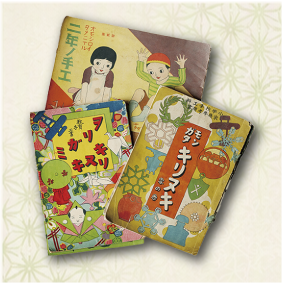
Craft books for schoolchildren from the Taisho era(1912–1926).
Their focus on nurturing creativity through kirigami and origami, reveals how deeply rooted in everyday life paper crafts had become at the time.
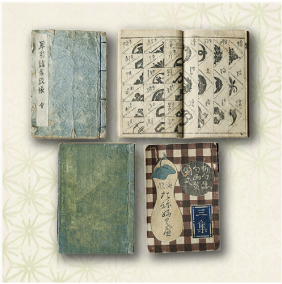
Antiquarian books from the Edo and Meiji periods.
Produced with sumi ink on washi paper, they are surprisingly durable. Accounts even mention such books being lowered into wells to protect them during fires.
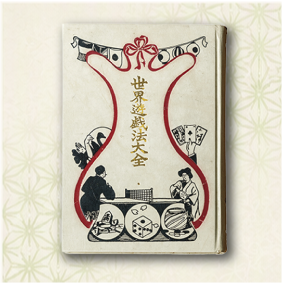
Sekai Yugiho Taizen, a comprehensive volume introducing various games, pastimes, and their rules from across eras and cultures, originally published in 1907.
Shimonaka’s library copy was a 1984 reprint.
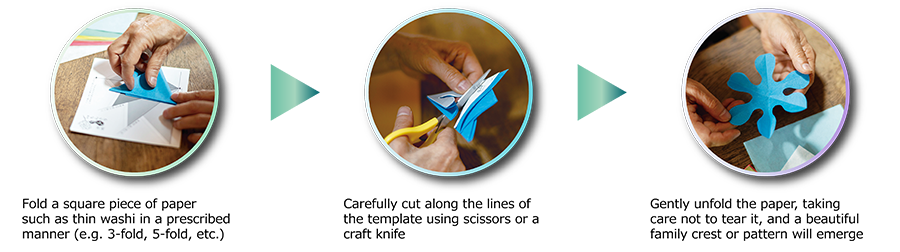
The basics of monkiri asobi are extremely simple. Thin paper such as washi is folded into prescribed forms — with 2-fold, 3-fold, or 5-fold patterns, for example. Cuts are then made along template lines drawn on it, using scissors or a craft knife, and finally the paper is gently unfolded. Through that simple process alone, though, geometric patterns of impressive beauty emerge from the palm of the hand. As she tells us, “As a child, it used to be exciting just to cut and unfold paper without much of a plan. What makes monkiri fundamentally different is that the cutting is done according to traditional pattern templates called monkirigata that have been carefully selected over long periods of time.”
Struck by the beauty of the intricate patterns that resulted from her experiments, Shimonaka began traveling around to antiquarian bookshops in Tokyo’s Kanda district and other places, collecting materials such as old family crest registers, pattern books, and design collections spanning the Edo, Meiji, and early Showa periods (1926 – c.1945). Through self-study she deepened her research. “The deeper I dig, the more I realize how much more there is to learn,” she tells us. Shimonaka found herself pleasantly immersed in the new and profound world of patterns, with motifs featuring everything from flora and fauna to even humorously mundane household items from everyday life.
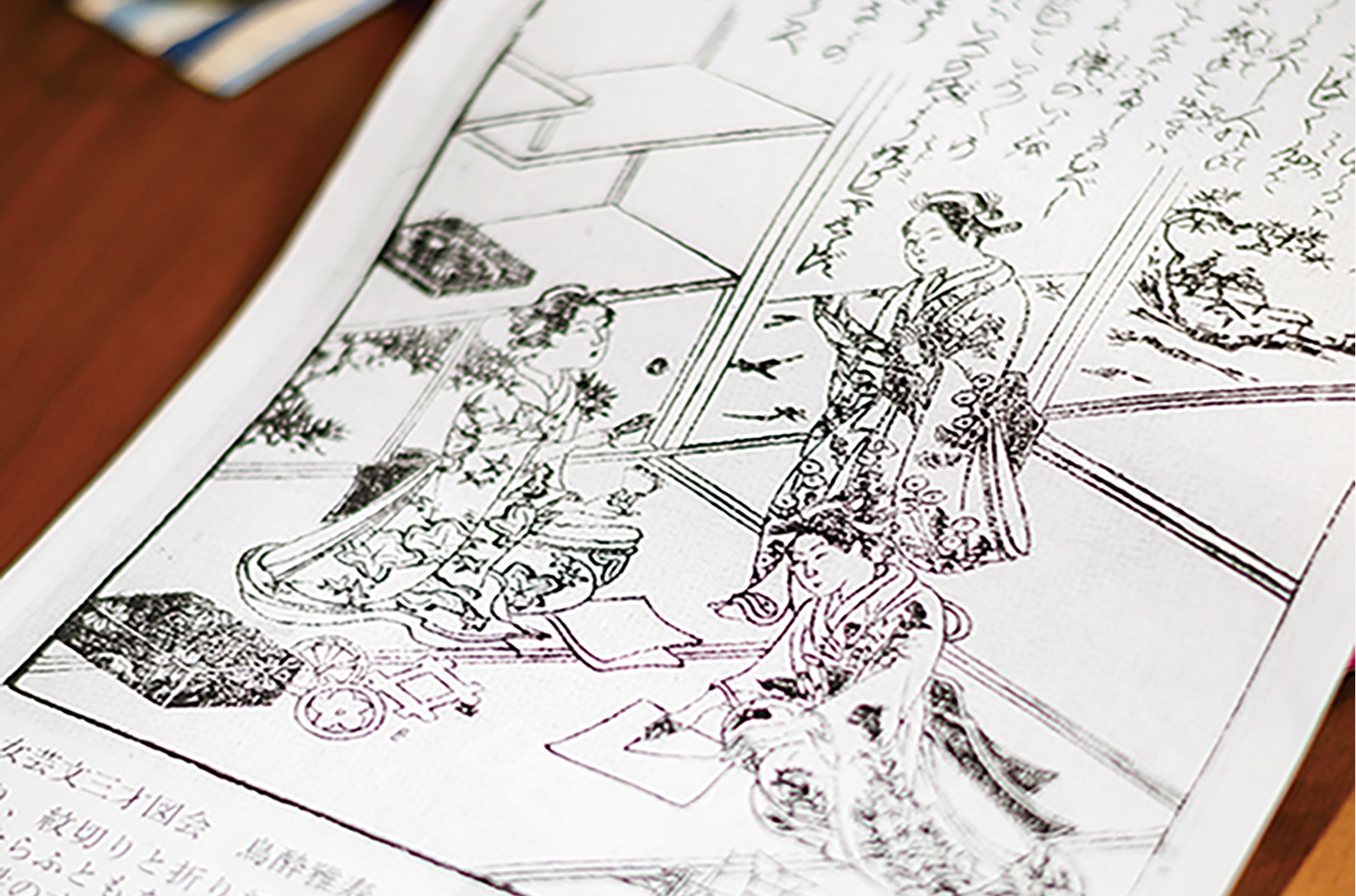
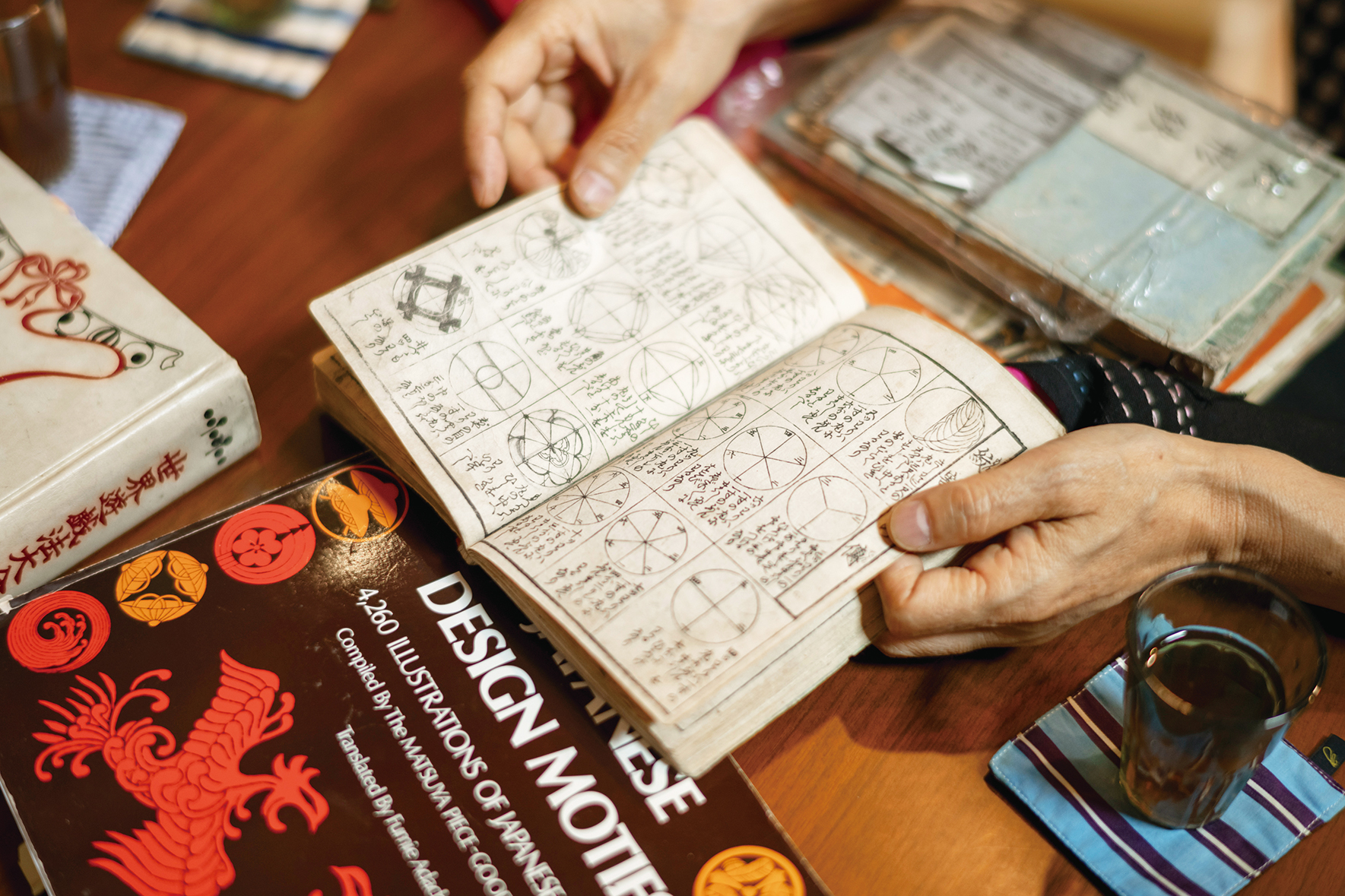
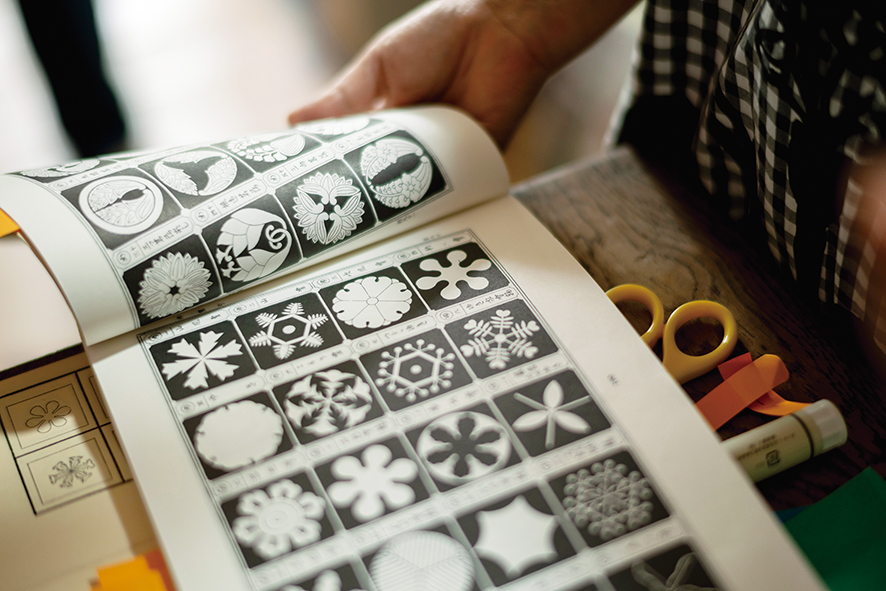
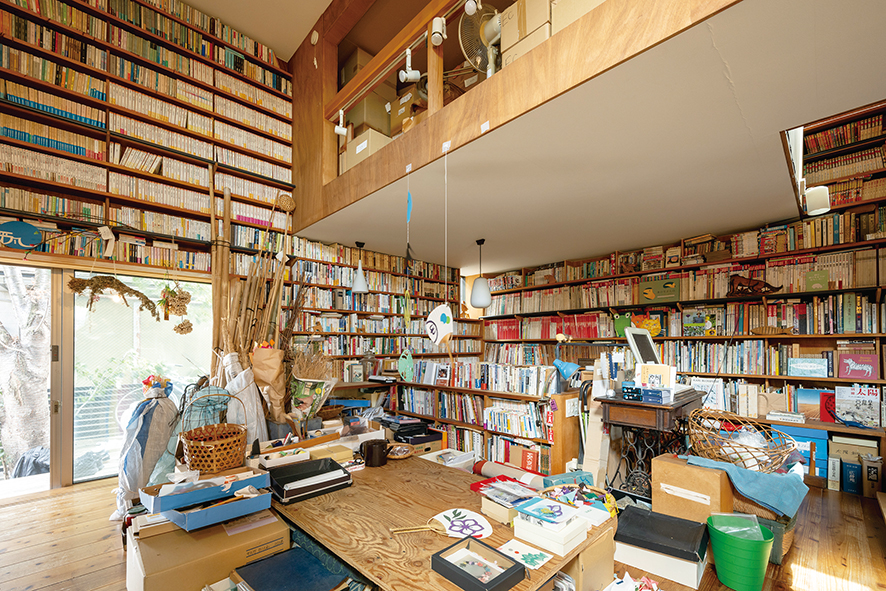

In the late Edo period (c.1750–1850), a time when the intellectual curiosity and playful spirit of common people reached a zenith, patterns such as kamon family crests went beyond being mere designs, acting as a form of communication almost like words. People shared a common cultural literacy; they would exchange a knowing look just by observing patterns on actors’ costumes or designs that referenced word plays.
“Delving deeper into the world of patterns inevitably leads to the daily lives of people. Patterns exist having been devised, made use of, and passed on by people. Their backgrounds always reveal something about the values and ways of life of the people who lived through the period the patterns date to, so they provide an endless source of fascination,” remarks Shimonaka.
Her interest has extended abroad, as well. One example was encountering a paper-cutting culture still maintained in rural China. In the region she visited, a tradition still lived on in which local residents would repaper their screens each New Year and paste red paper cutouts called chuanghua (or madohana in Japanese; literally “window flowers”) onto them, offering experiences of the passage of time as their color would gradually fade over the course of the year.
“When I asked a woman in the village if I could take one of the paper cutouts home because it was so beautiful, she replied, ‘Why would you want to do that? It breaks down over the course of the year. And there is meaning in making them again with our own hands.’ It is precisely because of their ephemeral nature, they are so easily destroyed, that the technique gets passed down so persistently. The values inherent to the craft deeply impressed me,” Shimonaka tells us. This is a paper culture where paper cuttings are not displayed as pieces of art but used as a matter of course in daily life. Creativity born from people’s lives, honed through their daily routines, quietly persists still today.
Shimonaka would see the powerful potential of paper-cutting crafts, as they live within daily life, demonstrated back home in Japan, as well. On visits to temporary housing in the town of Minamisanriku-cho in the aftermath of the 2011 Great East Japan Earthquake, she brought washi and monkiri with her. Victims of the disaster, she says, used them as a form of communication. She observed them absorbed in the craft, cutting out templates by hand, and presenting monkiri gifts to delivery drivers who had helped them, for example, or other people in their community as tokens of gratitude. There was also a cultural tradition similar to what she had found in rural China that had been maintained in the region. Every year at the year’s end, Shinto shrines’ chief priest would cut white kirigami as decorations for gohei staffs, kamidana shrines, and so on, and parishioners would display them on household kamidana for visual experiences of the transforming power of the deities over the course of the year.
“No matter how challenging the circumstances, decorations of new, pure-white kirigami — known as kiriko — provide emotional support, signifying the arrival of another new year. That came as a surprise to me and gave me the realization that, still in the world today, there are places where paper-cutting crafts have genuine power,” Shimonaka remarks. Discovering a living, breathing paper culture found as part of everyday life had impressed upon the artist anew that paper exists not merely as a material, but as a medium that connects people.
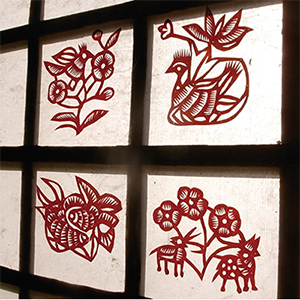
Chuanghua (“window flowers”), a paper-cutting culture preservedand passed down in rural China. Expressing wishes for happinessand abundance in daily life, the traditional decorations are put up in windows during the New Year and other celebrations.
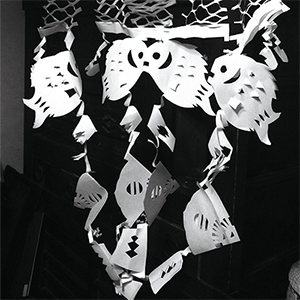
Kiriko paper-cutting decorations for kamidana shrines, a tradition preserved in Minamisanriku-cho, Miyagi Prefecture. Imbued with prayers fo r the coming new year, they are replaced each year, giving people a tangible sense of the transforming power of the deities and the seasons’ cycles.

Shimonaka currently holds monkiri asobi workshops throughout Japan. One of her key principles is not to “over-explain” to participants. Rather than simply providing detailed, step-by-step instructions, she is careful to deliberately leave space for them to work through the process with their own hands and learn through trial and error.
“The books from past eras were not very user-friendly at all. They would simply include illustrations without instructions about how to fold the paper. That, however, left space for the reader to think for themselves, allowing them to make discoveries on their own, like, ‘Oh, I see how it works now!’ You have to take care not to be overly accommodating. Moments of realization like that are something I value above all else in my workshops, too,” Shimonaka explains.
In the actual workshops, even participants who initially follow the template exactly begin, over time, to step outside the lines on their own. They start to wonder what might happen if they changed one part a bit and tried cutting it differently. Shimonaka believes that this process is the origin of a phrase like “breaking the mold” (expressed in Japanese as kata-yaburi, ‘breaking’ or departing from the template) — that it represents the sort of “soul-stirring foundation of crafting” that tends to get overlooked in modern education and creative expression.
“It is because molds — or templates — exist in the first place that we can talk about ‘breaking the mold’ as we do. It is precisely by appreciating the beauty of a form as it has been polished and refined over many years that we can take first steps toward establishing our own unique expressive approach. That is the true essence of creativity, and of learning, as well. It can be difficult to know what to do when you are just told to express your individuality. I believe that, as you become absorbed in the process and keep at it, though, your true self will naturally start to shine through,” says Shimonaka.
The tools used in her workshops are extremely simple: just scissors, craft knives, and beautifully colored washi paper. Shimonaka uses Ogawa Washi produced in and around the town of Ogawa-machi in Saitama Prefecture’s Hiki District.
“I have preferred machine-made washi for many years, as its fibers are less likely to snag than handmade paper, and craft knife blades glide through it more smoothly. I feel that pleasing textures and beauty in the material inspires you to value and appreciate what you have crafted,” says Shimonaka with a smile.

Recent years have brought rapid advances in digital technologies, including generative AI, ushering in an era where “answers” can be arrived at instantly without the need for painstaking research or hands-on engagement in the process. Shimonaka warns, however, that as a result of this convenience, humans may be losing sight of something essential.
“To experience the feeling that something ‘just clicks,’ as if it has become part of you, can only begin with experiences felt through your own hands and body, however small they may seem. Paper is a forgiving material, one that can be touched up, repaired, and even pasted back together if torn by mistake. However valuable the information provided by AI may be, it is those exhilarating moments of discovery through hands-on engagement, the feeling of ‘I did it!’, that truly take root in the human mind and heart.”
Shimonaka has restored or created over 500 monkiri templates to date. At her workshops, participants of different ages and nationalities gather around the same table, from three-year-olds to seniors in their 80s. As they look over the monkiri they have each made, they exchange sincere praise, commenting, “Very nice” and “Cool!” The space overflows with rich, human connection and the power of the moment, something that cannot be reduced to mere efficiency or logic.
“It feels as if we are being allowed to draw on the blessings of the rich, wonderful culture of template designs left to us by our predecessors,” she says.
“Or, you might say, to play amid the vast tapestry of history. I hope to continue sharing the joy of these meandering detours, which begin with this simple, hands-on craft form, with many more people in the future.”
In monkiri asobi, hundreds of years of accumulated time and experience, along with the down-to-earth yet endearing wisdom of humanity, are still very much alive today.


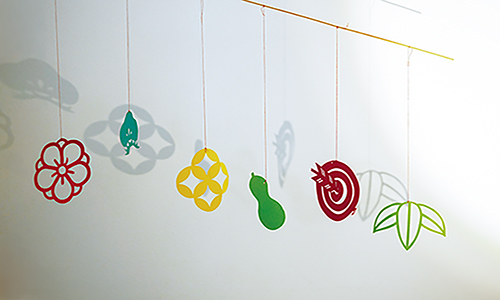
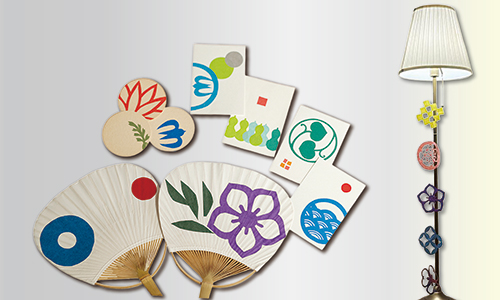
Try incorporating the cut-out patterns you craft into your daily life rather than simply admiring them. Make Tanabata decorations out of them, paste them onto paper hand fans, or hang them as mobiles to enjoy them with the changing seasons.

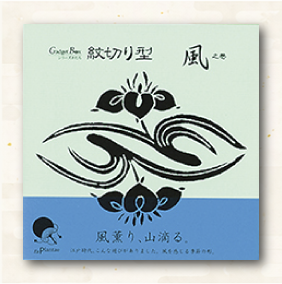
Monkirigata: Kaze no Maki
(“Monkiri Templates: Blowing Breeze Volume”)
(ex-plantae)
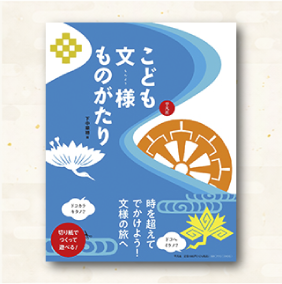
Kodomo Mon’yo Monogatari
(“The Story of Children’s Patterns”)
(Heibonsha Limited, Publishers)