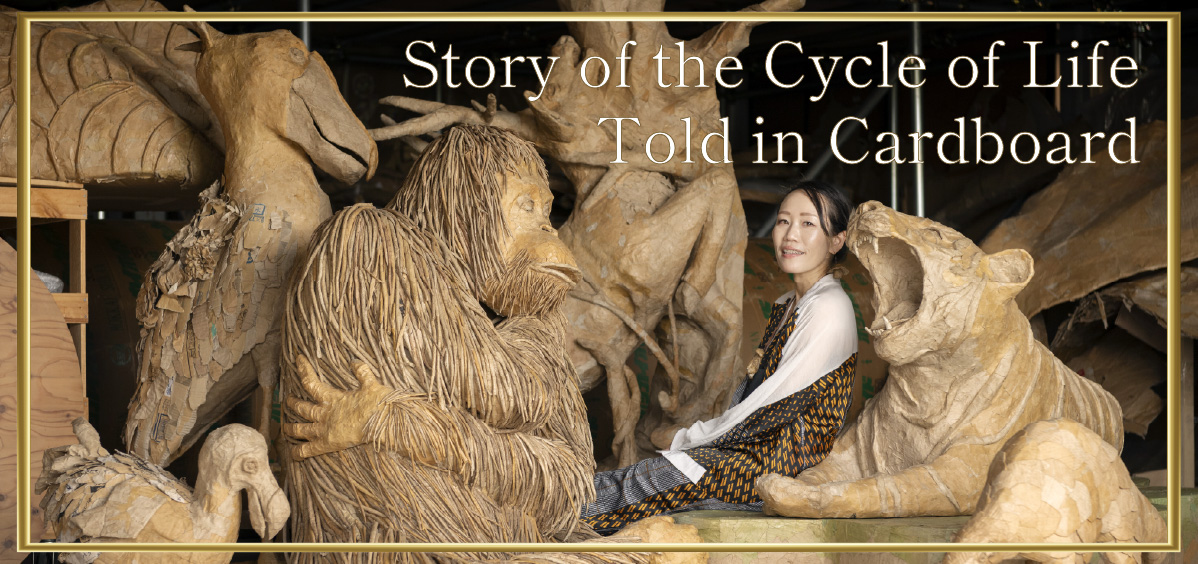
Wild animals in full 3D — charming, yet powerful, with such rich expressions and in dynamic poses that they radiate vitality, as if you can hear them breathing. These sozo*sculptures are created with cardboard previously used as packing materials. Sculptor Taki Tamada uses her unique sculpting techniques to transform everyday cardboard into captivating works of art. Bringing together the concepts of recycling materials and restoring life, her work quietly speaks to the future of our society.
*Sozo: Soft materials, usually clay, but also paper or plaster, shaped into three-dimensional sculptures of people, animals, and other motifs.
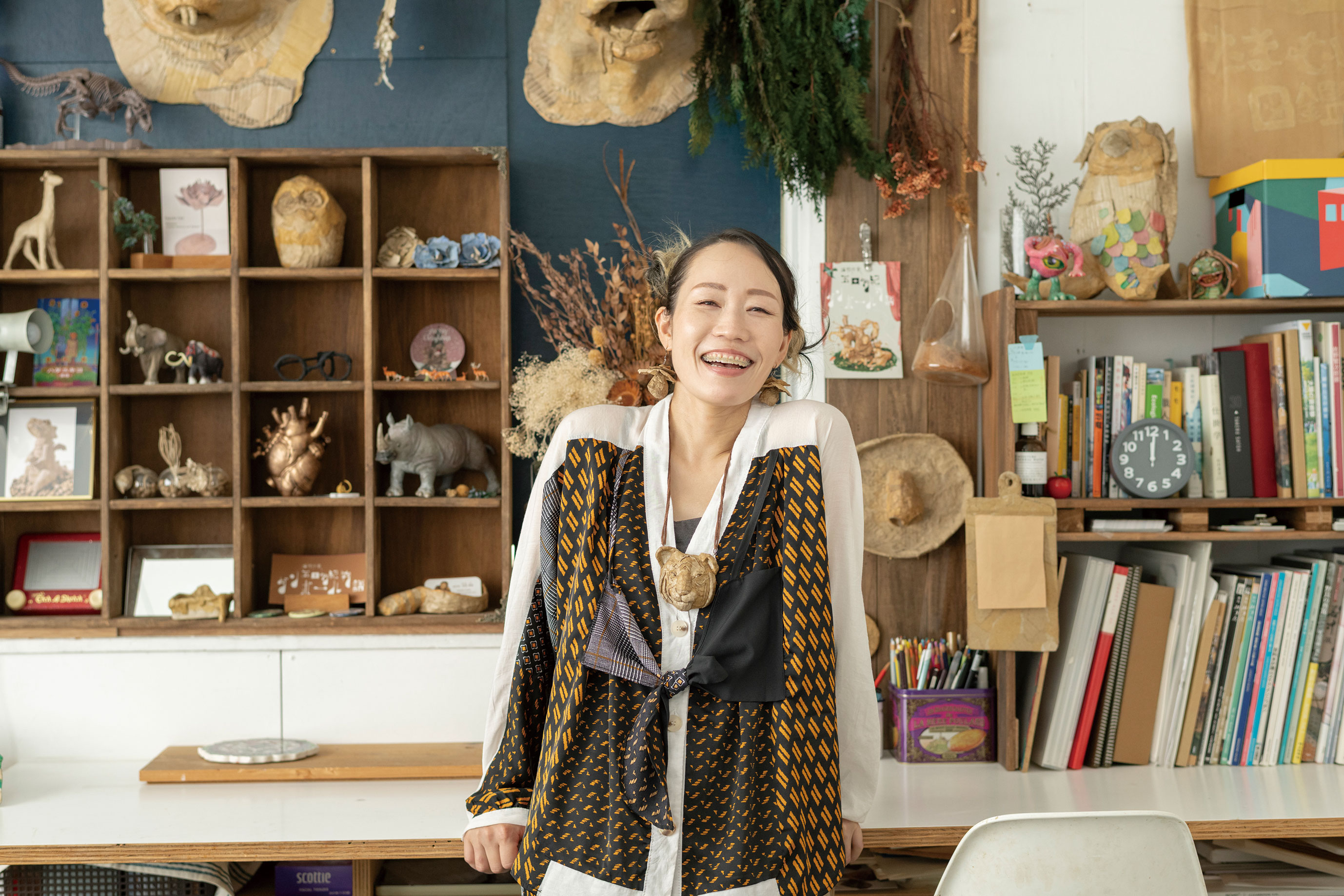
Taki Tamada Sculptor
Born in Hyogo Prefecture in 1983. Graduated from the Department of Art and Design, Faculty of Art and Design, Tama Art University. Tamada creates three-dimensional artwork using original techniques that leverage the unique properties of cardboard. In addition to exhibiting at museums and public spaces both in and outside Japan, she is active across a wide range of fields, including window displays, media appearances, and workshops in educational settings. Her work is part of the collections of The World Children’s Art Museum in Okazaki and the Wood One Museum of Art in Hiroshima.
https://tamadataki.com/
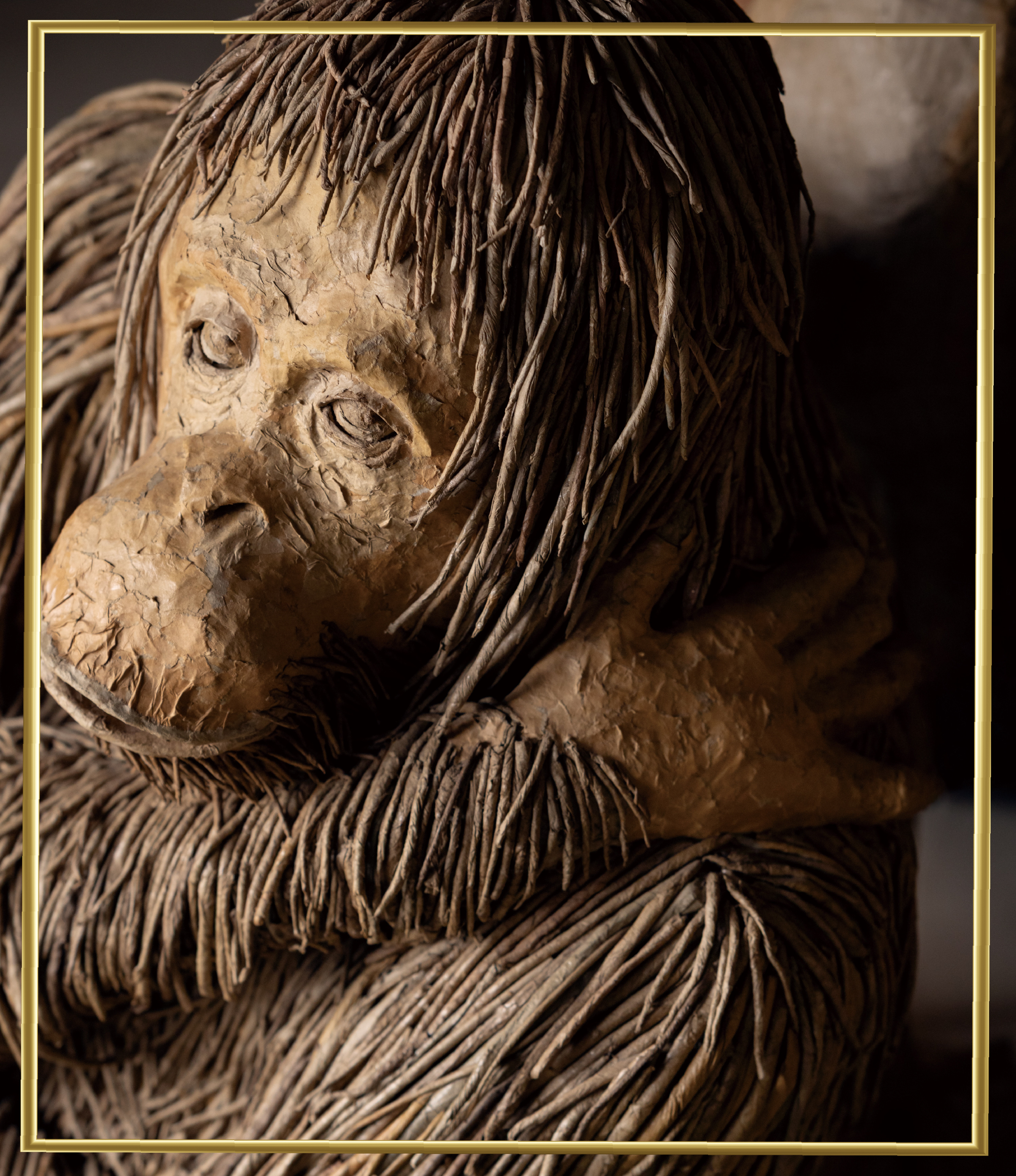
An orangutan, arms wrapped around its body, seems to speak with its gaze, tinged with sorrow. A tiger, mouth open wide, displays fierce fangs. The shoebill stands with serene dignity, caught perched on a moment of time.
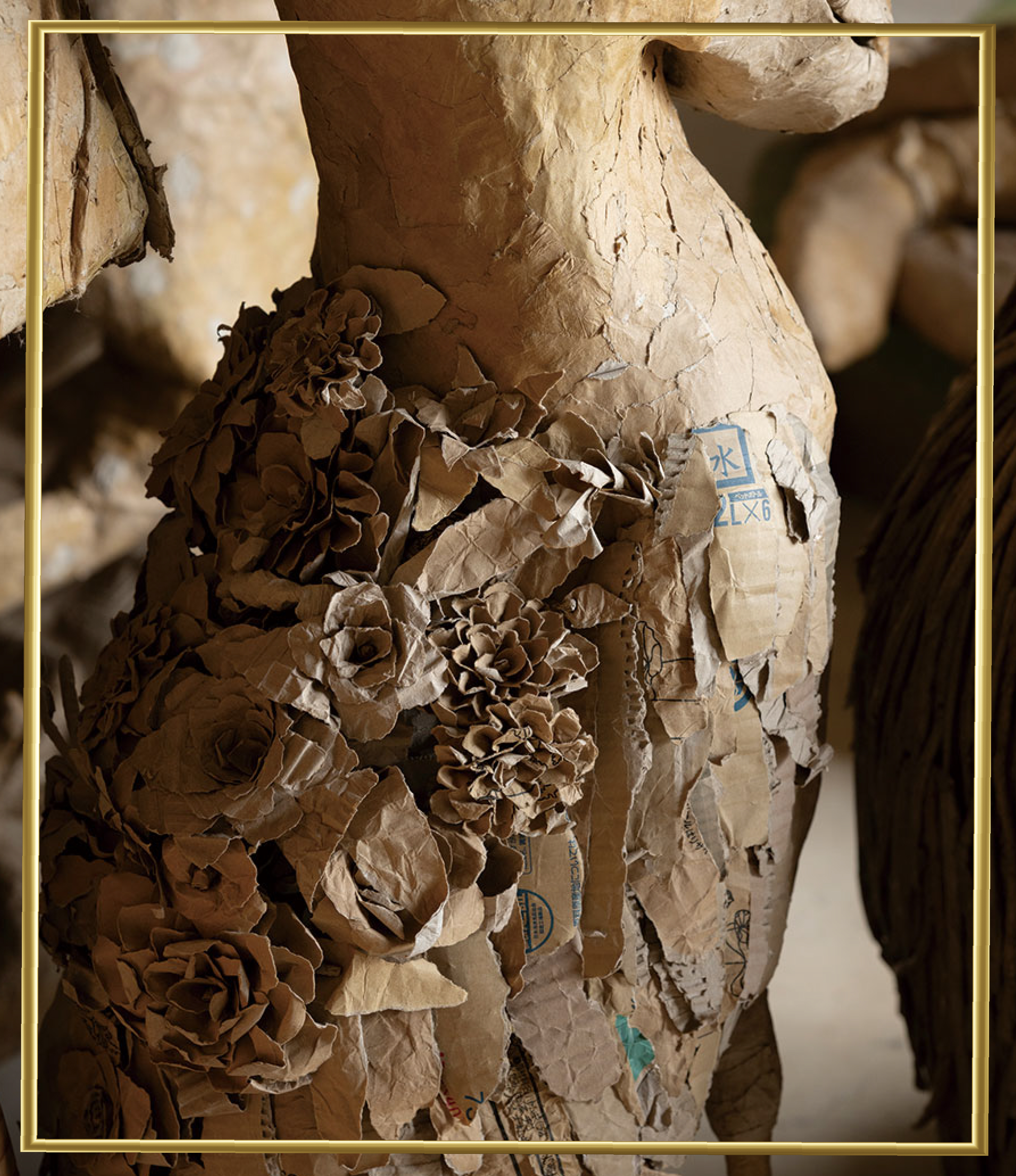
Although the smoothsurface of these endangered wild animals makes them appear to be sozo sculptures made of clay, they are in fact created entirely from cardboard. Their fur, wrinkled skin, undulating muscles, even the depth of emotion in the eyes and the facial expressions that engage the viewer — all brim with amusing personality that seem somehow human.
“I am not simply looking for realism. I layer and rearrange images I have in my mind,” says Taki Tamada, a sculptor whose medium is cardboard. She guides us straight away to the vast storage facility that houses her work. Here, specimens of wildlife, freed from their wrappings, lay quietly in rows.
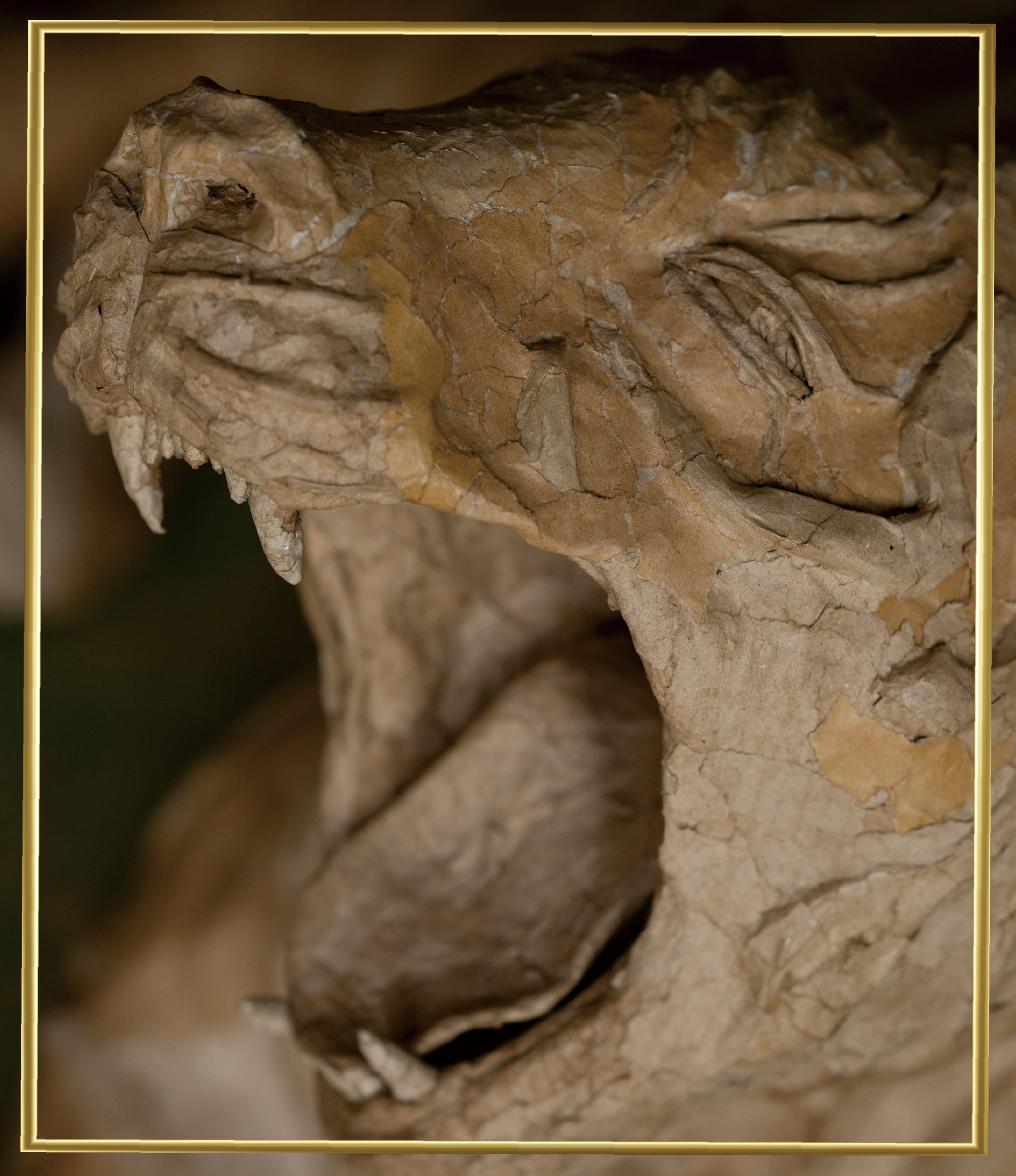
Most of Tamada’s work features creatures of the land and sea.Among them, her recently released series Zetsumetsu Kigushu no Monogatari (“Tales of Endangered Species”) has garnered a great deal of attention for the questions her pieces pose about dangers to ecosystems from the point of view of the creaturesthat inhabit them.
“I didn’t start creating these works withendangered species in mind. I chose motifs based on the sculptural beauty and fascinating characteristics of certain animals. But before I knew it, most of my works were of endangered animals. I express the concept of regeneration — breathing new life into endangered species —through the use of discarded cardboard. This is the fundamental theme of my creative work.”
Poaching and deforestation has dramatically reduced the orangutan population and the area they habitat. Looking at the orangutan that Tamada has created, the viewer is met with a gaze that seems cold and emotionless.
“The label endangered species is one that humans have come up with. The animals themselves don’t give it a second thought; they simply go quietly about their daily lives. I’ve adopted their perspective, accepting human action without resistance, to express the self-centered egotism of humans who act without regard for others,” she says.
Cardboard is a material that is essential to our lives. Lightweight, yet strong, it is used in so many ways as the best packaging material to protect products. Tamada began usingcardboard in her work while at art college.
“I was majoring in oil painting, but I began using cardboard, tearing it up and gluing it down to create flat collages. In a sense, I became fascinated by the properties of cardboard while playing around with it. It is solid and strong, but has a flexibility when you bend or crush it, so it can be shaped relatively easily to create whatever form you want. It’s readily available and easy to use, and above all, it’s light, so even large three-dimensional pieces are easy to transport. It suited me perfectly, I think.”
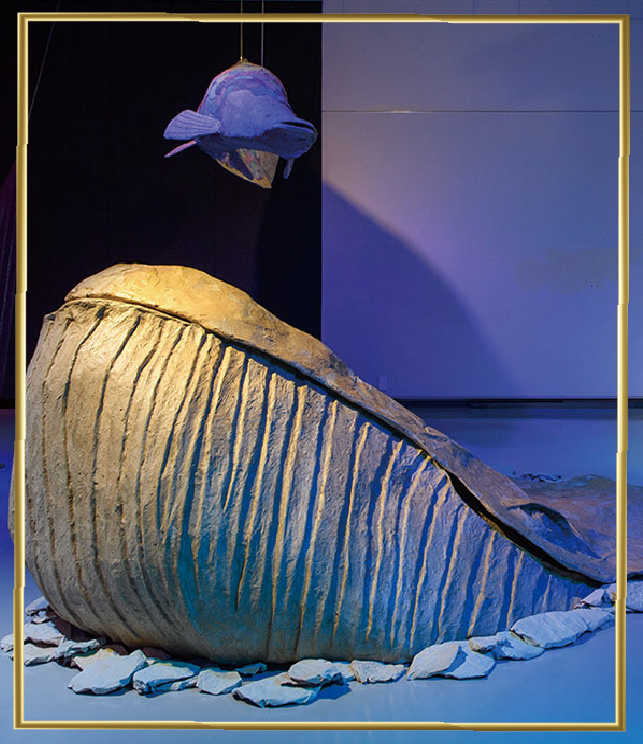
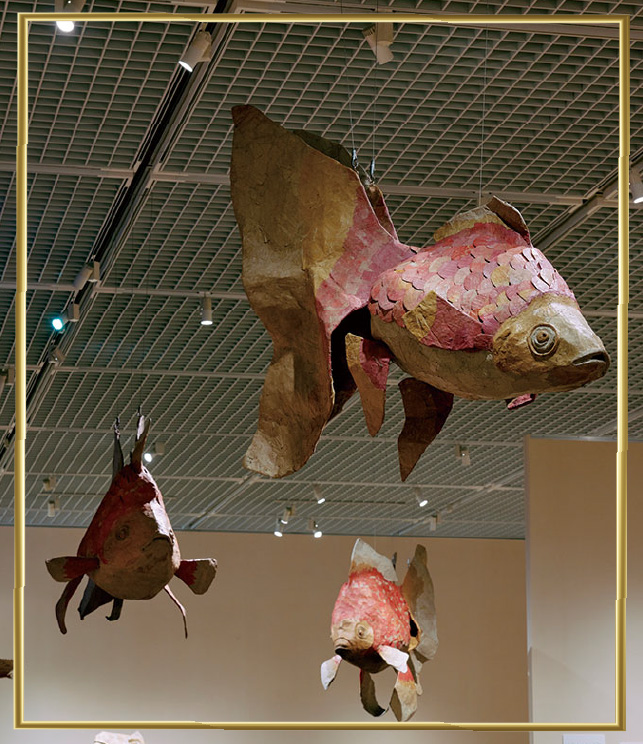
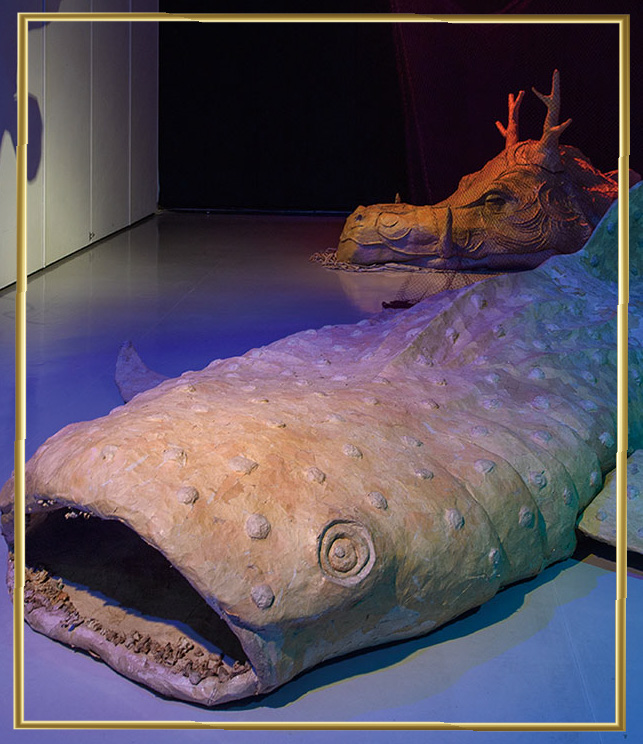
Photo: Tomohiro Inazawa
Not just any cardboard will do, though, when she is makingher art.
“I usually get what I need from a nearby drugstore, but I’ve had more opportunity lately to get cardboard from workshops and other places that no longer need it. We use the word cardboard as if it’s all just one thing, but it comes in quite a wide range of colors, so it’s difficult to find a close match to repair my older works. If I can’t find the color I need, I sometimes leave cardboard in a sunny spot so that the color fades.”
Tamada mostly uses cardboard in its natural state without any added color.
“The cardboard’s look and feel lends a warmth to the animal’s expression,” she says. “And since the eye tends to move first to color, I deliberately choose not to add color so that viewers can first focus on the form itself. After fully taking in the form, I hope people will then appreciate the different shades of the cardboard.”
Her works stand distinctly apart from the arts-and-crafts-like cardboard art made with usual cardboard. Tamada achieves a smooth texture that looks at a glance like clay sculpture using unique techniques that she developed through a process of experimentation.
“First, I create a rough mold using cardboard. I then take more cardboard, bending and crushing it to soften it, and soak it in a basin of water to peel the flat paper on the front and back away from the corrugated core. I tear pieces from the peeled paper and glue them directly onto the cardboard mold or mix them with glue to form a substance more like clay that I use for shaping. I layer these pieces onto the mold, patching and layering again and again,” she explains.
Tamada does more than simply use cardboard as it is. She softens it back to its soft raw paper state and manipulates it to achieve fine details that evoke everything from muscles, fur, and bumpy skin to scales. The animals she made appear poised to spring to life. This sense of vitality emerges from her unique techniques perfected through trial and error, the natural warmth of cardboard’s color, and a purely hand-crafted process that avoids any cutting instruments.
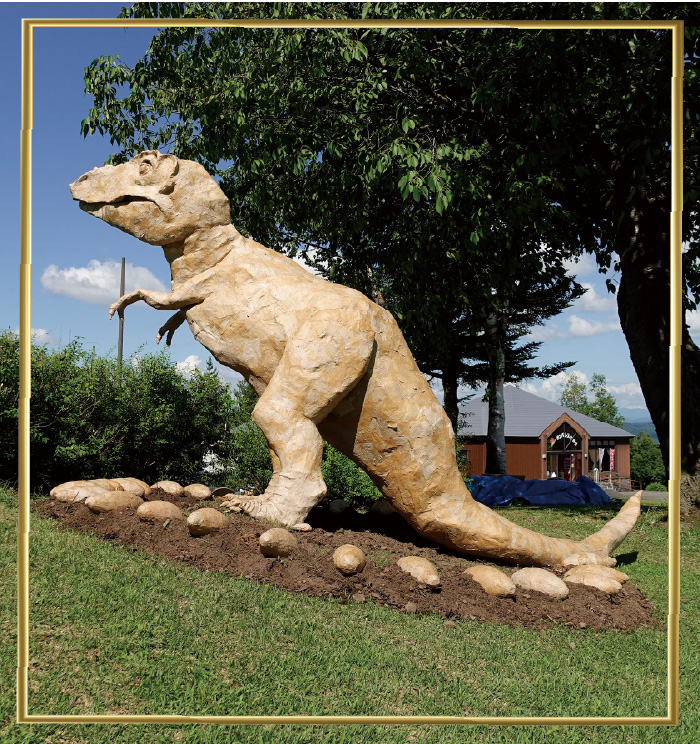
Outdoor dinosaur sculptures exhibited at Echigo-Tsumari Art Field in Niigata in 2024. Photo 1 was taken on June 30, the day of installation; photo
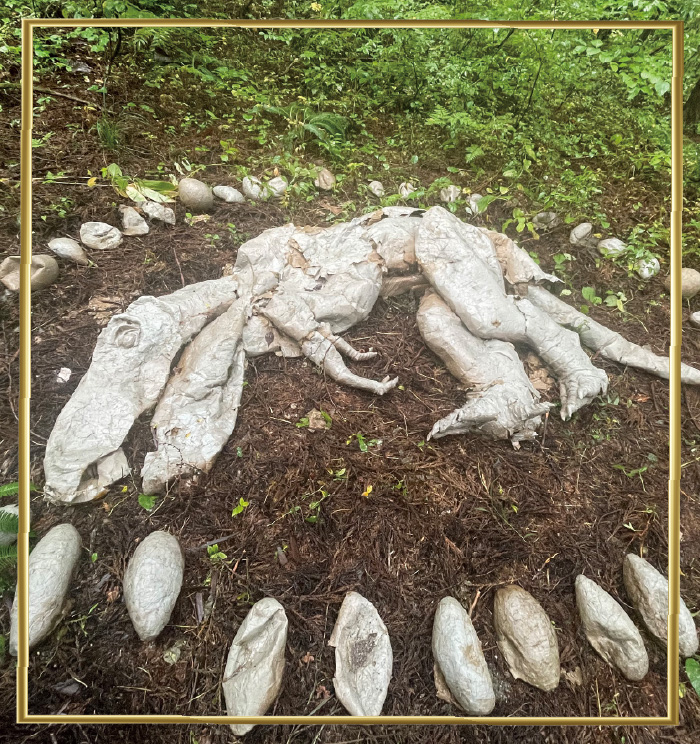
was taken on October 7 after the event ended.
In addition, Tamada shares all of the unique sculpting techniques that she has developed through years of hard work on social media and in workshops.“As an artist, I very much want to leave behind not only my
art, but also the sculpting techniques that I have developed. I don’t just want my name to go down as an inventor. I want the people who view my work to be inspired to create something themselves. In fact, I couldn’t be happier that, after seeing an exhibition or participating in a workshop, so many people say they want to try it themselves at home. For that reason, too, my goal is to be included in all art and crafts textbooks for elementary through high school.”
Tamada actively holds workshops alongside her exhibitions, as well as those hosted by local governments, public facilities, schools, and other educational institutions, to teach people about her sculpting techniques.
“I mostly hold workshops for parents and children to participate in together. I give them two hours to create together one piece of art based on a living creature, and as I think about how to break the instructions down in a way that children can understand, I often come to new realizations. I want to keep doing this because the children’s ideas can open up new perspectives for me,” she says. “The fact that people tell me they want to see my work and that they ask me to teach them how to do it is what drives me.” This motivation will surely only continue to build for Tamada.
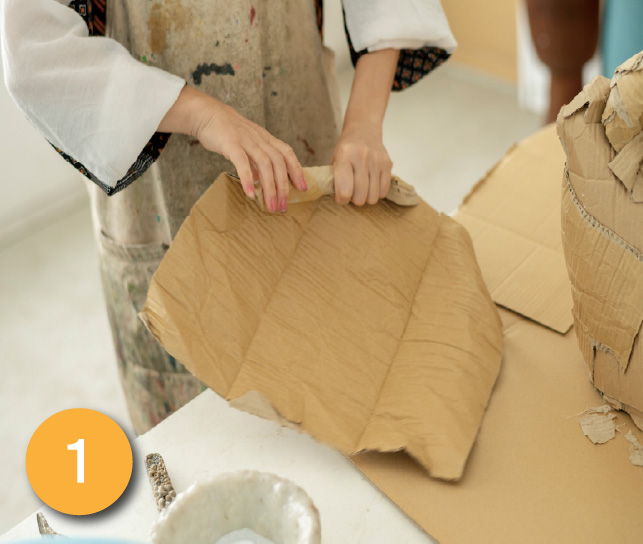
Bend and roll torn pieces of cardboard to soften, then shape to mold (See step 5 for finished mold).
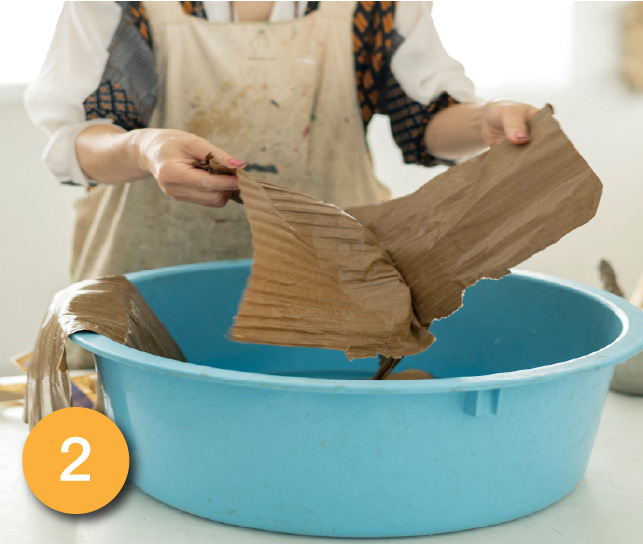
Soak in water to separate into three layers: top and bottom sheets of paper and corrugated core.
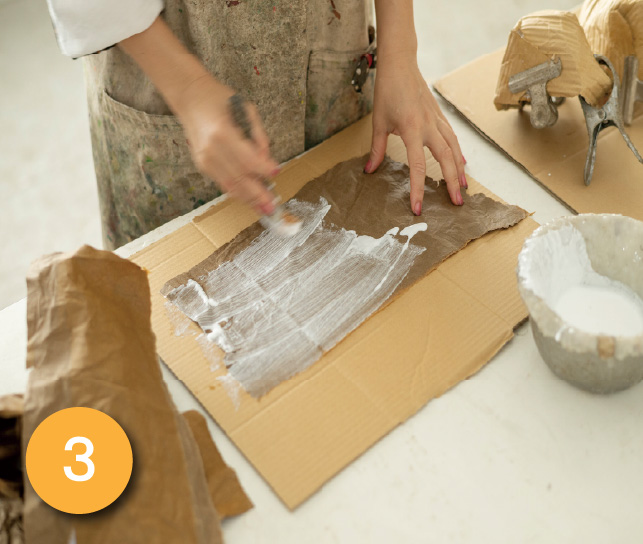
Apply craft glue to top sheets of paper, then affix to mold to create animal body or other object.
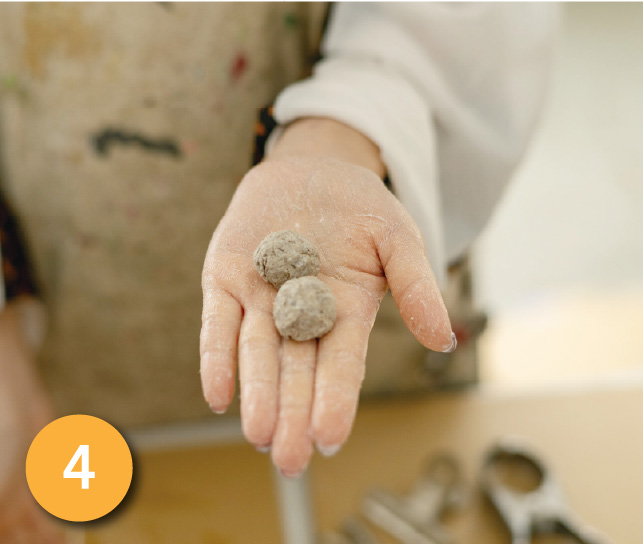
Make clay-like material by mixing craft glue with wet paper and rolling into ball, and use for fine, detailed shaping.
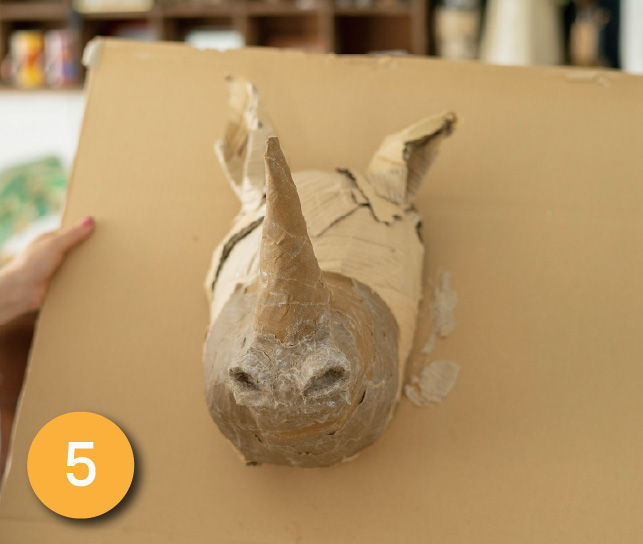
Once dry, the paper affixed with craft glue will adhere without peeling.
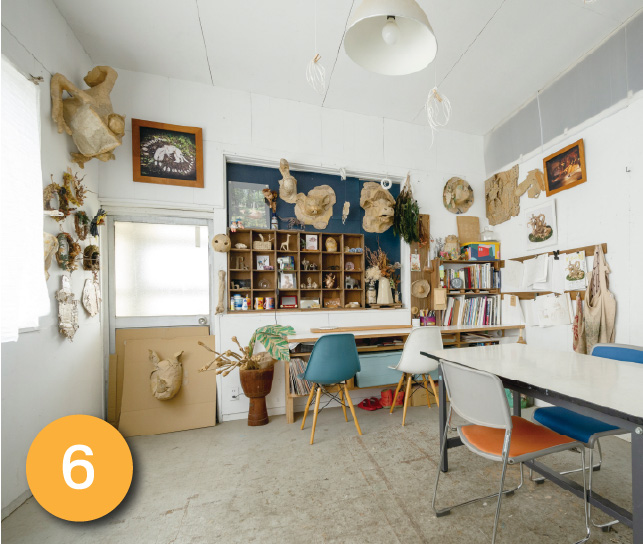
Smaller works of art, prototypes and rough sketches displayed in the studio

